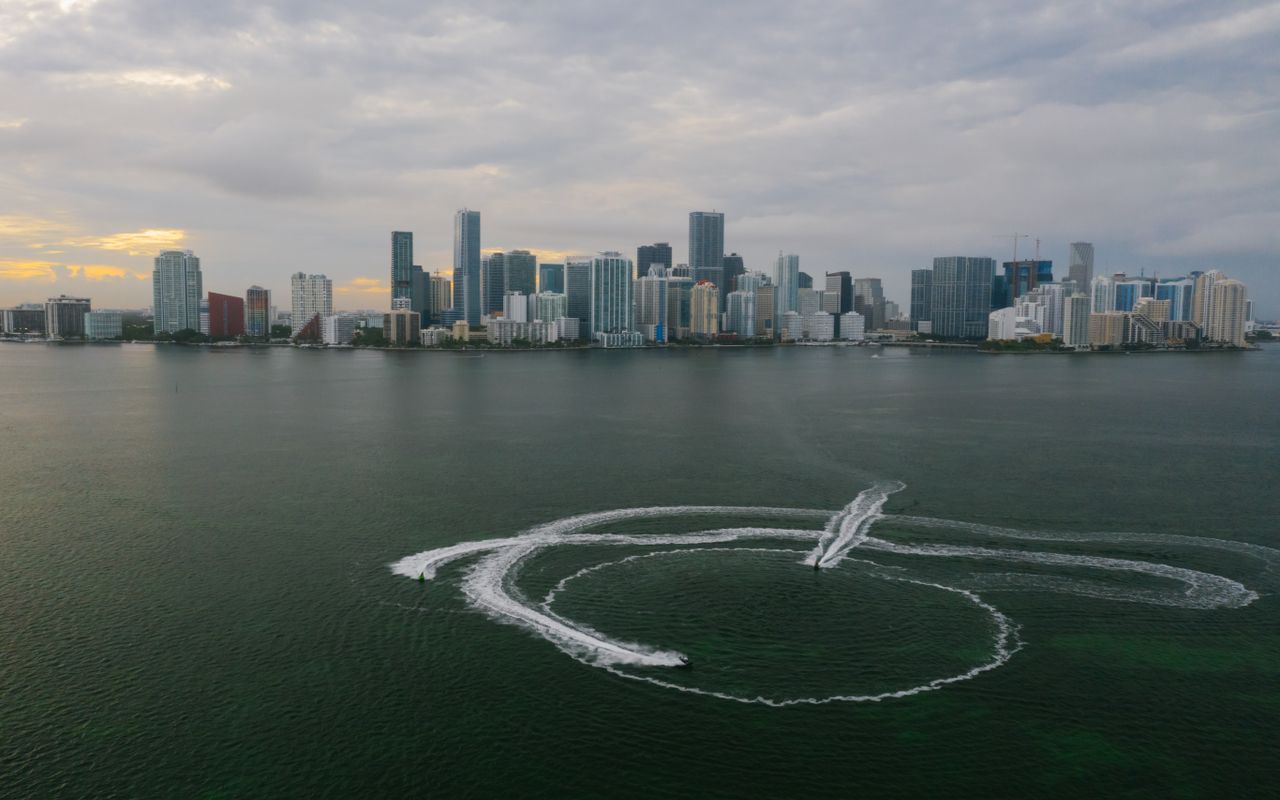
Mortgage guidance for Miami, Florida.
Local market context, loan options, and honest answers for buying or refinancing in Miami.
Buyers in Miami commonly use jumbo, bank-statement, asset-based, DSCR, and foreign-national financing. Miami's density, luxury condo market, self-employed borrower base, and international buyer activity make specialized programs essential.
- Miami is one of the largest and most international housing markets in the U.S.
- Jumbo financing is common across most of Miami-Dade.
- Bank-statement, asset-based, and foreign-national programs are widely used.
- DSCR supports investor and short-term rental purchases.
The Miami market
Miami is one of the most complex and internationally connected housing markets in the country. Housing includes ultra-luxury waterfront in Miami Beach, Star Island, Fisher Island, and Coral Gables; high-density condos across Brickell, downtown Miami, and Edgewater; single-family in Coconut Grove, Pinecrest, and Palmetto Bay; and rapidly expanding new construction in Doral, West Kendall, and Homestead.
Buyer profiles skew self-employed, business-owner, cross-border, and investor-driven. Standard employment W-2 profiles are the minority. Jumbo is common at most price points; bank-statement, asset-based, and DSCR programs handle the wealth and self-employment patterns.
Who lives here
Miami's identity is global, high-density, and rapidly evolving, with distinct neighborhood cultures across Miami Beach, Wynwood, Little Havana, Coral Gables, and Coconut Grove.
Miami by the numbers
Current market conditions, Miami-Dade County loan limits, and property tax context — pulled from federal and state sources rather than estimated, and refreshed on a schedule so the page ages honestly.
Miami-Dade County loan limits — 2026
| Property | Conforming | FHA |
|---|---|---|
| 1 unit (single family) | $832,750 | $667,000 |
| 2 units (duplex) | — | $853,900 |
| 3 units (triplex) | — | $1,032,150 |
| 4 units (fourplex) | — | $1,282,700 |
Above the conforming limit, financing moves to a jumbo loan. VA loans have no county limit for eligible borrowers with full entitlement.
4.5740 millsMiami-Dade County general county levy, 2025
County millage is the general county operating rate only. Your actual bill also includes school, municipal, and special-district levies, and depends on assessed value, Save Our Homes caps, and any homestead or other exemptions you qualify for. Use this as directional context, not as an escrow quote.
Sources: Federal Housing Finance Agency — Conforming Loan Limits · U.S. Department of Housing and Urban Development — FHA Mortgage Limits · Florida Department of Revenue — Property Tax Data Portal · Last updated December 31, 2025. Figures are published reference data, not a quote or a commitment to lend. Vabasso Mortgage is an Equal Housing Lender.
Common home types in this market
Ultra-luxury waterfront
Miami Beach, Star Island, Fisher Island, Coral Gables.
High-density condos
Brickell, Downtown, Edgewater, Miami Beach.
Single-family estates
Coconut Grove, Pinecrest, Palmetto Bay.
New-construction
Doral, West Kendall, Homestead.
Condo financing in a post-Surfside Miami market
Miami has more high-rise condominium inventory than almost any U.S. market, and Florida's structural-integrity reforms — mandatory milestone inspections at 30 years (25 near the coast) and fully funded reserve studies — have made project-level underwriting a bigger part of every condo purchase here. Lenders request HOA questionnaires, recent reserve studies, and litigation disclosures before they'll approve financing on a specific building, and associations that haven't completed required inspections or that are still phasing in reserve contributions can trigger additional scrutiny or push a purchase toward non-warrantable condo financing.
Buyers should ask for the condo questionnaire and reserve study early in a Miami condo purchase, not at the financing stage, because a building with a pending special assessment or an open inspection finding can change both the loan program and the total cost of ownership. Non-warrantable condo programs exist for buildings that don't meet standard agency guidelines, but they typically carry different down payment and pricing structures than warrantable-project financing.
Insurance, flood zones, and DTI in Miami-Dade
Much of Miami-Dade sits in FEMA-mapped flood zones, and coastal and Biscayne Bay-adjacent properties often carry both a National Flood Insurance Program policy and separate wind coverage, either through the private market or Citizens Property Insurance Corporation as the state's insurer of last resort. Together, flood and wind premiums can represent a meaningful share of the total housing payment, and lenders fold estimated insurance and HOA dues into the debt-to-income calculation used to size a loan.
Because premiums vary widely by construction type, elevation, roof age, and wind-mitigation features, two similar-looking Miami homes can carry very different insurance costs. Getting an actual insurance quote — not a generic estimate — before finalizing an offer helps avoid a late-stage affordability surprise, particularly for older buildings without updated wind mitigation or impact-rated openings.
Financing options commonly considered here
Miami's luxury pricing requires jumbo; self-employed borrowers use bank-statement; HNW buyers use asset-based; DSCR supports investors and short-term rentals.
These are commonly considered programs — not a commitment to lend. Eligibility, pricing, and structure depend on your profile and the specific property.
Jumbo Loan
Premium financing beyond conforming limits.
Explore program Bank StatementBank Statement Loan
For self-employed borrowers whose W-2 doesn't tell the whole story.
Explore program Asset DepletionAsset Depletion Mortgage
Qualify using the wealth you've built.
Explore program Asset QualifierAsset Qualifier Mortgage
Your balance sheet is your qualification.
Explore program DSCRDSCR Loan
Qualify on the property's cash flow.
Explore programRun the numbers before you decide.
Mortgage Payment Calculator
Estimate your monthly principal, interest, taxes, and insurance.
Buying a HomeHome Affordability Calculator
See a price range that fits your income, debts, and lifestyle.
Managing a MortgageAmortization Calculator
See exactly how each payment splits into principal and interest.
Buying a HomeDown Payment Calculator
See how different down payments affect your loan.
Investing & BuildingInvestment Property Calculator
Underwrite a rental with realistic assumptions.
Common questions about buying in Miami
How does a bank-statement loan work in Miami?
Bank-statement loans qualify self-employed borrowers using deposits into business or personal accounts over a defined period, rather than tax returns. Programs vary by lender.
Can foreign nationals buy in Miami?
Yes. Foreign-national mortgage programs exist for non-U.S. citizens without a U.S. credit profile, subject to lender guidelines, larger down payments, and reserve requirements.
Are Brickell condos financeable?
Yes, subject to the specific project's approval status and lender guidelines. Jumbo condo, investment, and DSCR programs are commonly used.
How does DSCR work for a Miami rental?
DSCR loans qualify borrowers based on the property's projected rental income. Miami's strong short-term and long-term rental market makes DSCR programs commonly considered.
What loan fits a Miami self-employed buyer?
Bank-statement, asset qualifier, and asset depletion programs are commonly considered for self-employed borrowers, subject to lender guidelines.
How does Florida's condo structural-integrity law affect financing a Miami condo?
Florida's post-Surfside reserve-funding and milestone-inspection requirements mean lenders now scrutinize a Miami association's reserve study, special assessments, and inspection status closely. Buildings with underfunded reserves, an open milestone inspection, or a pending special assessment can be harder to finance conventionally and may push a buyer toward portfolio or non-warrantable condo programs.
What is a non-warrantable condo and why does it matter in Miami?
A non-warrantable condo doesn't meet Fannie Mae or Freddie Mac project requirements — often due to high investor concentration, commercial space, litigation, or reserve shortfalls, all common in Miami's high-rise stock. These units typically require portfolio or non-QM condo financing with different down payment and rate structures.
How much does Citizens Property Insurance affect Miami-Dade affordability?
Miami-Dade carries some of Florida's highest wind and flood exposure, and premiums — whether through Citizens or the private market — are frequently a larger share of the monthly payment than in inland markets. Lenders include estimated insurance in the qualifying payment, so getting a real quote early, not a placeholder estimate, matters for accurate pre-qualification.
Does Miami's non-homesteaded tax jump surprise buyers?
Yes. Florida's Save Our Homes cap limits annual assessment increases for a homesteaded primary residence, but a home's taxable value typically resets toward market value after a sale. Non-homesteaded buyers, and even homesteaded buyers who bought at a low prior assessment, often see a materially higher first full-year tax bill than the seller was paying.
What are current mortgage rates in Florida for Miami buyers?
Florida mortgage rates change daily with bond-market movements and borrower-specific factors. Vabasso Mortgage publishes live 30-year fixed, 15-year fixed, FHA, and VA benchmarks; a personalized quote gives the most accurate rate for your Miami scenario.
What is the average mortgage payment in Florida for a Miami home?
Payments vary by price, down payment, program, taxes, and insurance. Use Vabasso's mortgage calculator Florida suite to model a monthly payment for your Miami purchase or refinance.
How does a DSCR loan work in Florida for Miami investment properties?
DSCR loans qualify based on the property's projected rental income instead of the borrower's personal income. They are a popular Florida loan option for investment properties in Miami.
Can I use a jumbo loan in Florida for a Miami purchase?
Yes. Jumbo loans are commonly used in Florida when the loan amount exceeds conforming limits. In Miami, jumbo financing is often used for luxury homes, waterfront properties, and high-price markets.
Can I use an asset qualifier loan in Florida for a Miami home?
Yes. Asset qualifier and asset depletion programs are commonly used in Florida for high-net-worth buyers who have significant assets but limited traditional earned income. Eligibility depends on the asset type, liquidity, and program guidelines.
Mortgage Intelligence
How Much Home Can I Afford?
A practical framework for estimating an affordable home-price range using income, debts, down payment, taxes, insurance, and reserves.
Pre-Qualification vs. Pre-Approval
How the two most common early-stage mortgage steps differ, when each matters, and what documentation each generally requires.
How the Mortgage Process Works
A plain-language walkthrough of the mortgage journey from pre-qualification through closing.
Understanding Down Payments
How down payment size influences loan program eligibility, mortgage insurance, monthly payment, and total interest.
Mortgage Glossary
Ready to explore buying in Miami?
Get pre-qualified in minutes, or ask Vabasso AI a question about your specific situation. A licensed advisor is available when you'd like to speak with a human.
Information on this page is educational and does not constitute a loan approval, rate quote, or commitment to lend. Eligibility depends on borrower, property, and program guidelines. Vabasso Mortgage is an Equal Housing Lender.